The position of a dog’s show collar—and where the lead attaches—can influence how the dog carries itself and moves in the ring. Every dog responds differently, but a small adjustment may help create a steadier, more balanced gait.
A good handler should move with confidence and purpose, which is why regular practice is so important. A show dog needs to learn how to gait, stand for assessment and be examined by the judge. Gaiting means moving your dog, usually at a trot, so the judge can assess its movement and overall structure. When standing, some breeds are traditionally stacked, with the handler carefully positioning the dog’s legs. Others are shown free-standing, where the dog learns to stand naturally in a balanced position without the handler manually placing its feet.
A lead coming from the top of the neck may encourage additional lift or bounce in some dogs. Positioning the attachment underneath the neck, slightly to the side beneath the chin, may help the same dog move in a steadier and more balanced way. Light contact at the side beneath the chin can help regain the dog’s attention and encourage the desired head carriage. It should always be gentle and must never involve pressing on the windpipe.
Do not be afraid to explore different equipment and positions to discover what suits your dog best. Always introduce changes gradually during quiet training sessions, away from the distractions of the show ring.
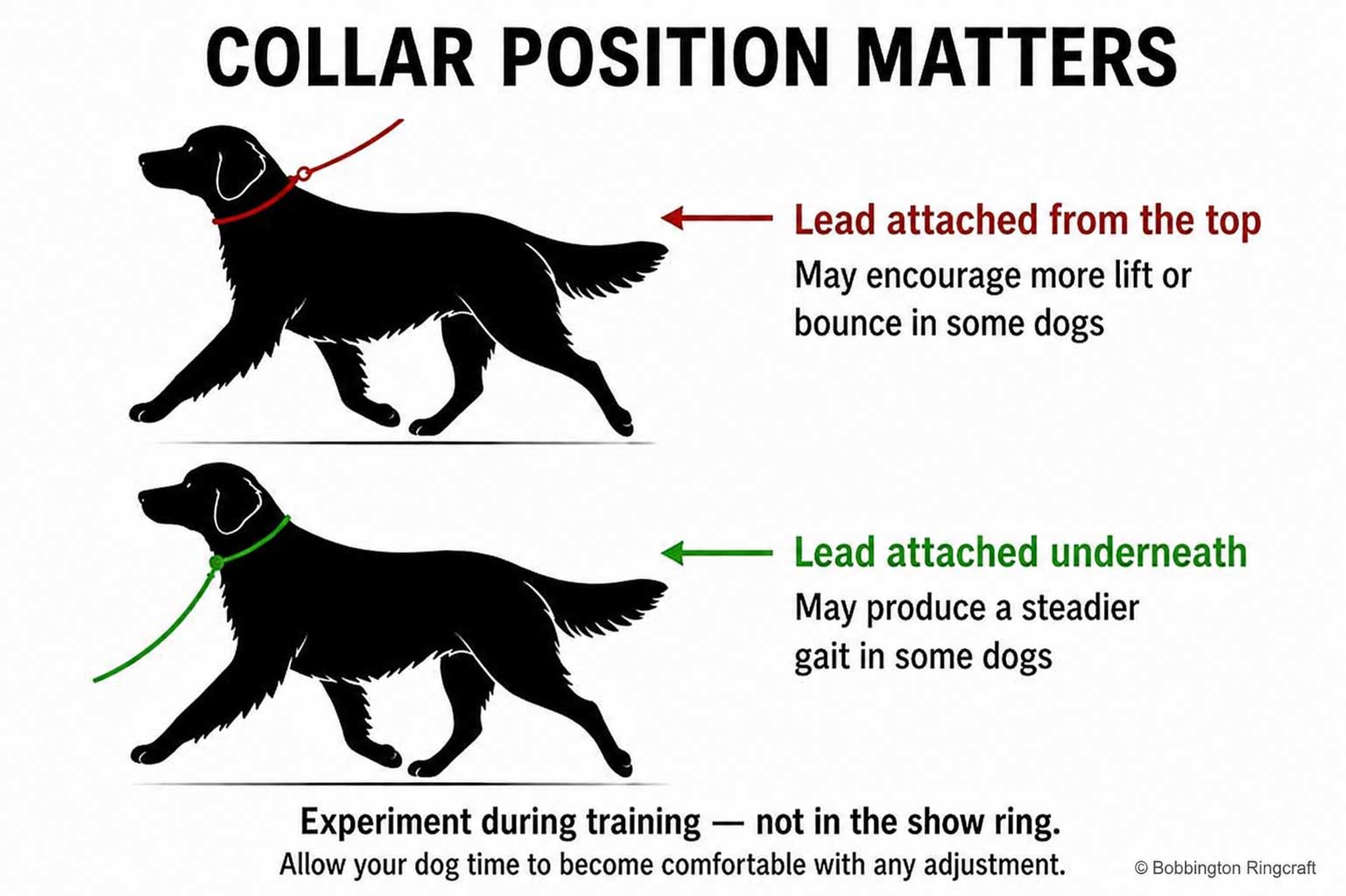
Practise before show day: give your dog plenty of time to become comfortable with any adjustment before using it in the ring.
Preparing Your Dog for the Show Ring
Showing should be an enjoyable experience for both you and your dog. Good preparation, patience and regular practice will help to build confidence and allow your dog to perform at their best.
- SocialisationIntroduce your dog gradually to different people, dogs, surroundings, noises and situations. A well-socialised dog is more likely to feel relaxed and confident in the busy show environment.
- Ringcraft trainingRegular training helps both dog and handler learn the skills needed for the show ring. At Bobbington Ringcraft, we can help with moving your dog at the correct pace, standing your dog for examination and presenting them to their best advantage.
- Handling and examinationDogs need to become comfortable with being approached, touched and examined by different people. This should always be introduced calmly and positively, taking account of each dog’s age, breed and individual temperament.
- Grooming and presentationRegular grooming helps to keep your dog’s coat and skin in good condition. Before entering the ring, make sure your dog is clean, comfortable and presented appropriately for their breed.
- Entering a showCheck that your dog is correctly registered and eligible for the classes you wish to enter. Always read the show schedule carefully and ensure that your entry is submitted before the closing date.
- On the dayArrive in plenty of time so that you can settle your dog, find your ring and prepare without rushing. Remember to bring everything you may need, including your ring number, show lead, water, treats and grooming equipment.
Above all, remain calm, patient and encouraging. Every dog is an individual and will progress at their own pace. Regular, enjoyable training will help you and your dog grow in confidence and develop a strong partnership in the show ring.